English| EUR
Suggested for you
More currencies
Choose a language
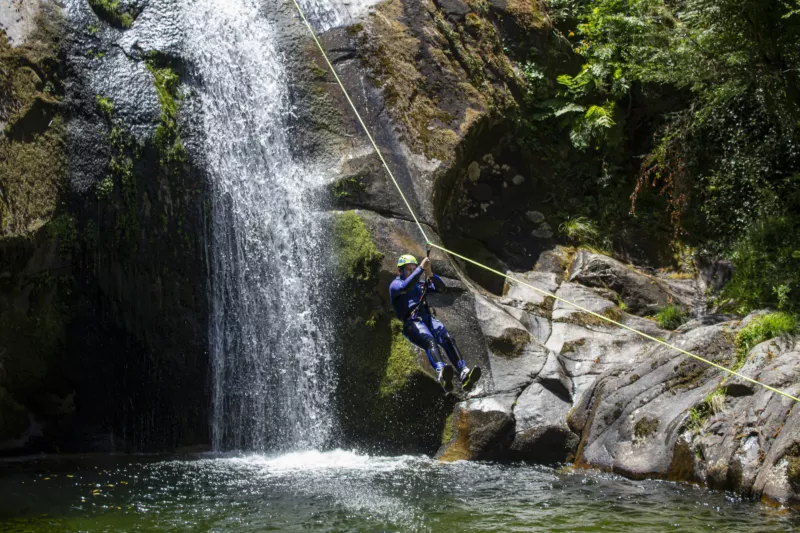
Peneda-Gerês National Park shelters some of Portugal's most dramatic canyon systems, where granite gorges cut through forested slopes and cold mountain water carves routes through schist and bedrock. A canyoning tour gerês lets you rappel waterfalls, slide natural chutes, and swim emerald pools in one of Europe's oldest protected wilderness areas. This guide covers route selection, operator standards, gear requirements, and logistics for planning your descent.
Quick answer
A canyoning tour geres typically runs three to six hours and requires a certified guide, wetsuit, helmet, and harness. The park is open year-round with no entrance fee, though tour operators charge between 45 and 85 euros per person depending on route difficulty and group size. Most descents begin between 09:00 and 10:00 to ensure adequate daylight for safe navigation of technical sections.
The Gerês massif holds more than twenty mapped canyon routes, but only seven are commercially operated with consistent safety oversight. These routes vary from beginner-friendly stream walks with short rappels to advanced descents requiring confidence in open-face abseiling and deep-water jumps. The Rio Fafião and Ribeira de Pé-de-Cabra systems see the highest traffic, offering moderate grades with rappels between eight and fifteen meters. The Ribeiro do Arado route includes a thirty-meter waterfall descent and demands prior abseiling experience. Peneda-Gerês canyoning operates under seasonal hydrological constraints. Spring melt from April through June delivers high flow rates that amplify difficulty and reduce margin for error. Summer months see calmer water levels and warmer air temperatures, making July and August the most forgiving window for first-time participants. Autumn rains return unpredictability, and winter descents are rare outside of experienced technical groups. Operators monitor precipitation and adjust bookings accordingly, sometimes canceling tours with as little as two hours' notice when upstream rainfall raises water levels beyond safe thresholds. All commercial canyon tours in the park require third-party liability insurance and adherence to the Portuguese Federation of Mountaineering and Climbing safety protocols. Guides must hold a Técnico de Turismo de Aventura credential, renewed biennially through practical assessment. Equipment standards are non-negotiable: five-millimeter neoprene minimum, EN-certified helmets, dynamic canyoning ropes rated for wet conditions, and descenders designed for controlled friction on wet rock. Operators who cut corners on gear or guide certification are reported to the Instituto da Conservação da Natureza e das Florestas, which holds enforcement authority within park boundaries. Physical preparation matters more than athleticism. Canyon descents demand sustained focus, tolerance for cold water immersion, and comfort with exposure on vertical faces. Most routes involve two to three hours of active movement with limited rest, including scrambling over boulders, wading through waist-deep pools, and maintaining grip on slick granite. Upper-body strength aids rappel control, but technique and calm decision-making under fatigue outweigh raw power. Participants with shoulder injuries, vertigo, or cardiovascular conditions should disclose these to operators during booking—not on arrival at the trailhead.
“The Gerês massif holds more than twenty mapped canyon routes, but only seven are commercially operated with consistent safety oversight.”
The most effective window for canyoning in Peneda-Gerês National Park is from late spring to early autumn, prioritizing the 09:00–18:00 daylight hours for safe navigation. Stable weather conditions are critical to ensure water levels remain within safe parameters for technical descent.
Mild temperatures 15°C–22°C; ideal water levels.
Spring offers clear paths and consistent water flow for technical navigation.
Warm temperatures 20°C–30°C; lower water flow.
Early starts are essential to avoid peak heat and maximize daylight.
Cooler temperatures 12°C–20°C; risk of increased rain.
Stable weather remains common, providing quieter trails and steady conditions before winter rains.
Verdict: The optimal period is May, June, or September during the 09:00–18:00 window to ensure maximum daylight and stable water levels.
Access to Peneda-Gerês National Park is free of charge for visitors. Costs for canyoning activities are independent of the park and are determined by third-party tour operators.
Verdict: While park entry is 0 EUR, canyoning tour costs vary based on the service provider and the selected route.
Peneda-Gerês National Park remains accessible 24 hours a day. While the park itself is open continuously, guided canyoning tours operate strictly during daylight hours for safety.
Peneda-Gerês National Park is located in Northern Portugal, and reaching the remote river canyons requires private transport or pre-arranged transfers. Public transport options are limited in the mountainous interior, making a car or professional guide service the most direct approach.
A3 and N101 from Porto to Gerês
Private transfer from Porto or Braga
Local trails from park trailheads
Plan your arrival for the 09:00–18:00 window to ensure optimal daylight for canyoning safety and visibility. Using a GPS navigation system is recommended as mobile reception can be inconsistent within the park's deeper valleys.
Canyoning in Peneda-Gerês requires verified equipment, fitness preparation, and advance operator booking.
Everything you need to know about canyoning tour geres
Most guided excursions are designed to accommodate beginners, provided participants have basic swimming skills and physical comfort in water. Guides will provide all necessary safety equipment, including wetsuits and helmets, to ensure a secure experience in the local aquatic trails. A professional canyoning tour geres focuses on teaching basic techniques such as rappelling and sliding safely. Once you are comfortable, you can explore the rugged granite landscapes and water-carved chutes of Northern Portugal. Participants are advised to bring a swimsuit, a towel, and sturdy footwear that can get wet, such as old sneakers or dedicated water shoes. Waterproof cameras are also recommended to capture the granite gorges and clear mountain streams. Your guide will handle the technical gear like harnesses and ropes, so you can focus on enjoying the natural environment. While specific requirements depend on the route chosen, many providers require participants to be at least 12 years old and in good health to navigate the varied terrain. It is essential to communicate any medical concerns to your provider in advance of your Peneda-Gerês excursion. Guided sessions often involve a mix of climbing and scrambling that may be physically demanding for younger children or those with limited mobility. The Peneda-Gerês National Park is located in Northern Portugal and is best reached by private vehicle to navigate the mountainous terrain efficiently. There is no major public transit hub nearby, making rental cars the most reliable option for reaching your meeting point. Detailed directions to specific trailheads are usually shared by your chosen operator upon booking confirmation. While the park is open to the public at no cost, entry is free for all visitors. Please note that specific sensitive zones, such as Mata de Albergaria, may have restricted access or additional regulations to protect the environment. Fees are only applicable in these protected areas, though most canyoning activities occur outside these zones. The best arrival window is 09:00–18:00 to maximize daylight hours for your canyoning tour geres. Starting within this timeframe ensures optimal visibility for technical maneuvers and enhances overall safety during your descent through the canyon.